8000+
Certified Learners
15+
Years Avg. faculty experience
40+
Happy Clients
4.5/5.0
Average class rating
What is DevOps Process and Concept?
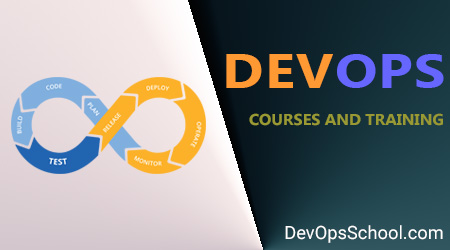
DevOps is a set of practices and a cultural philosophy that aims to unify software development (Dev) and IT operations (Ops) to improve the efficiency, speed, and quality of software delivery. The core concept of DevOps is to break down the traditional silos between development and operations teams, encouraging them to work together throughout the entire software lifecycle—from planning and development to testing, deployment, and monitoring.
The DevOps process emphasizes automation, continuous integration (CI), and continuous delivery (CD). Automation tools help streamline repetitive tasks like code testing, integration, and deployment, ensuring faster and more consistent delivery of software. Continuous integration involves regularly merging code changes into a central repository, followed by automated testing to identify errors early. Continuous delivery extends this by automatically deploying tested code into production environments, enabling faster rollouts with reduced manual intervention.
Additionally, monitoring and feedback play a crucial role in the DevOps process. Real-time monitoring of applications and infrastructure ensures that issues are detected and resolved proactively, while feedback loops help teams adjust and improve their processes continuously.
In essence, DevOps fosters a culture of collaboration, transparency, and shared responsibility, with the ultimate goal of delivering higher-quality software at speed, while improving operational efficiency and customer satisfaction.
Why DevOps Process and Concept is Important?
The DevOps Process and Concept has gained tremendous traction in the software industry due to its ability to address several significant challenges faced by traditional software development and IT operations teams. Here's why the DevOps process is critical for organizations in today's fast-paced digital landscape:
1. Faster Time-to-Market:
DevOps accelerates the software delivery pipeline by automating repetitive processes, reducing bottlenecks, and enabling rapid deployment of new features and fixes. With continuous integration (CI) and continuous delivery (CD), organizations can ship new code more frequently and quickly, improving their time-to-market and enhancing their competitive edge.
2. Improved Quality and Reliability:
DevOps ensures that code is tested automatically at multiple stages of the pipeline, ensuring higher-quality releases. By using automated testing, continuous monitoring, and feedback loops, organizations can detect issues early in the process, which leads to fewer defects and more reliable software in production.
3. Better Collaboration:
DevOps fosters collaboration and shared responsibility between development, operations, and security teams. This leads to a more cohesive work environment, where everyone works together towards common goals. By sharing accountability for both the development and operational sides of the software, the overall efficiency and productivity of teams increase.
4. Enhanced Security:
Security is built into the DevOps pipeline through DevSecOps, integrating automated security checks, vulnerability assessments, and code analysis early in the development cycle. This shift-left approach ensures that security is not an afterthought but an integral part of the development process.
5. Greater Agility and Flexibility:
The DevOps process enables organizations to quickly adapt to changing market demands and customer feedback. With agile methodologies integrated into DevOps, teams can make adjustments on the fly, push incremental updates, and even roll back changes easily if needed.
6. Cost Efficiency:
By automating infrastructure provisioning (using Infrastructure as Code), reducing downtime, improving collaboration, and optimizing resource usage, DevOps leads to more efficient operations and cost savings. The process also reduces the need for manual interventions and minimizes human errors, leading to lower operational costs.
7. Scalability and Innovation:
DevOps fosters an environment where organizations can experiment with new features and innovate at a faster pace. It also supports the ability to scale infrastructure rapidly through automation, enabling organizations to meet changing demands without significant overhead.
Course Features of DevOps Process and Concept
The DevOps Process and Concept course is designed to provide participants with a deep understanding of both the theoretical principles and practical tools necessary to implement DevOps practices in an organization. Some key features of this course include:
1. Comprehensive Curriculum:
The course covers the full range of DevOps practices, from cultural shifts to tool integration and implementation strategies. Topics include:
-
DevOps culture and mindset
-
CI/CD pipeline setup
-
Automated testing and quality assurance
-
Containerization and orchestration
-
Infrastructure as Code (IaC)
-
Monitoring and observability
2. Hands-on Labs:
Learners gain practical experience in real-world scenarios using popular DevOps tools. They will:
-
Build a CI/CD pipeline
-
Automate infrastructure using Terraform
-
Use Docker to containerize applications
-
Monitor system performance using Prometheus and Grafana
3. Expert Instructors:
The course is taught by experienced DevOps professionals with real-world experience in implementing DevOps in both small startups and large enterprises.
4. Toolchain Exposure:
Learners are introduced to a wide variety of DevOps tools, such as:
-
Git for version control
-
Jenkins or GitLab CI for continuous integration
-
Docker and Kubernetes for containerization and orchestration
-
Terraform and Ansible for Infrastructure as Code
-
Prometheus and Grafana for monitoring and observability
5. Interactive Learning:
Students engage in practical exercises, quizzes, and group discussions to ensure a thorough understanding of the concepts. Real-world case studies are discussed, illustrating the impact of DevOps in various industries.
Training Objectives of DevOps Process and Concept
The main training objectives of the DevOps Process and Concept course are to ensure that learners:
1. Understand the DevOps Culture:
-
Grasp the importance of collaboration between development, operations, and security teams.
-
Learn how DevOps enhances communication and builds a culture of shared responsibility for both development and production.
2. Master CI/CD Concepts:
-
Learn to implement continuous integration and continuous delivery pipelines.
-
Understand how automated testing and deployment speed up software delivery and improve quality.
3. Implement Infrastructure as Code:
-
Gain proficiency in managing infrastructure using code with tools like Terraform, Ansible, and CloudFormation.
-
Learn to automate infrastructure provisioning and configuration.
4. Automate Testing and Deployment:
-
Learn how to automate unit tests, integration tests, and performance tests within the CI/CD pipeline.
-
Understand deployment strategies such as blue/green, canary, and rolling deployments.
5. Monitor and Improve Systems:
-
Implement monitoring and logging solutions to track system performance and uptime.
-
Use feedback loops to continuously improve systems and deployment processes.
6. Gain Proficiency with DevOps Tools:
-
Gain hands-on experience with the most commonly used DevOps tools and technologies, including Docker, Kubernetes, Jenkins, GitLab, and Terraform.
Training Methodology of DevOps Process and Concept
The training methodology is designed to engage learners with both theoretical knowledge and practical application. The course combines various learning formats to ensure the participants achieve a thorough understanding of DevOps principles and can apply them in real-world scenarios.
1. Instructor-Led Sessions:
-
Live sessions where instructors provide in-depth lectures on DevOps concepts and practices.
-
Discussions on real-world challenges, followed by insights from industry experts.
2. Hands-on Labs:
-
Interactive, guided labs allow students to implement what they learn in a safe, sandbox environment. They work with tools such as Docker, Jenkins, Terraform, and Kubernetes.
3. Real-World Case Studies:
-
Learners will study case studies of successful DevOps implementations in organizations across different industries. These case studies illustrate common challenges and solutions in DevOps adoption.
4. Group Activities & Peer Learning:
-
Group exercises and collaboration are emphasized to mirror the collaborative nature of DevOps in the workplace.
5. Continuous Assessment:
-
Regular quizzes, assignments, and practical tasks to ensure students are grasping key concepts and can implement them in practical situations.
6. Capstone Project:
-
Learners will complete a final project that involves implementing a DevOps pipeline for a mock application. This project will test their skills in CI/CD, containerization, IaC, and monitoring.
Training Materials of DevOps Process and Concept
The training materials provided throughout the DevOps Process and Concept course are designed to support diverse learning styles and ensure that learners are equipped with resources to deepen their knowledge.
1. Course Handbook:
-
A comprehensive guide containing all the theoretical concepts, definitions, and tool-specific tutorials used throughout the course.
2. Lab Exercises:
-
Practical lab worksheets that walk learners through the steps of setting up a CI/CD pipeline, configuring Terraform for infrastructure, and managing Kubernetes clusters.
3. Tool Cheat Sheets:
-
Quick reference guides to popular DevOps tools such as Jenkins, Docker, Kubernetes, Terraform, and GitLab. These materials include command syntax, common use cases, and best practices.
4. Slides and Presentations:
-
Slide decks used during instructor-led sessions, summarizing key points from lectures and providing visual guides to complex DevOps concepts.
5. Video Tutorials:
-
Short, self-paced video tutorials to supplement live sessions, covering tool usage, configuration, and workflow.
6. Project Templates:
-
Ready-to-use GitHub repositories and Docker configurations that learners can use for hands-on practice or reference during projects.
7. Certification Exam:
-
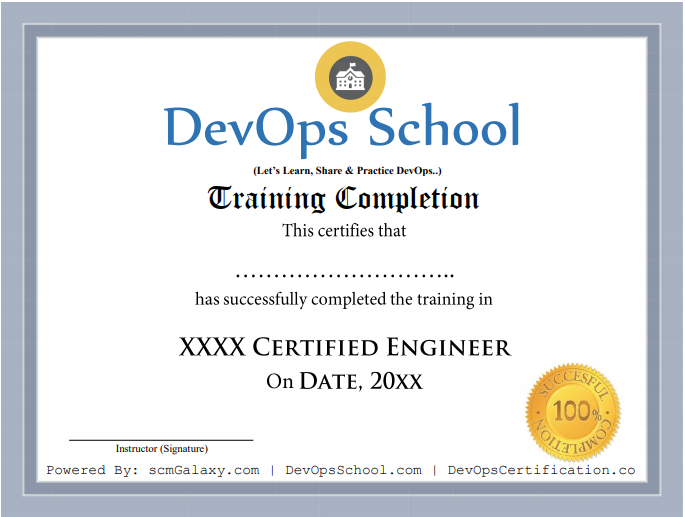
A final exam or assessment to test knowledge on key DevOps concepts, tools, and practices. Successful completion earns a DevOps Process and Concept certification.